

Resource & FAQ
Free Guided Meditations & Resources
Therapy is one way to support your well-being. I also recommend free guided meditations and grounding practices available on Insight Timer that many clients find supportive between sessions or before starting therapy.
These resources are created by trusted meditation teachers and clinicians and are well suited for anxious, sensitive, and marginalized nervous systems. You’ll find options that emphasize gentleness, consent, and emotional safety, without pressure to feel a certain way.
What You’ll Find
- Guided meditations for anxiety and overwhelm
- Grounding practices for sensitive nervous systems
- Self-compassion exercises
- Tools for moments when your mind feels stuck in overdrive
You are welcome to explore these resources at your own pace and use what feels supportive to you.
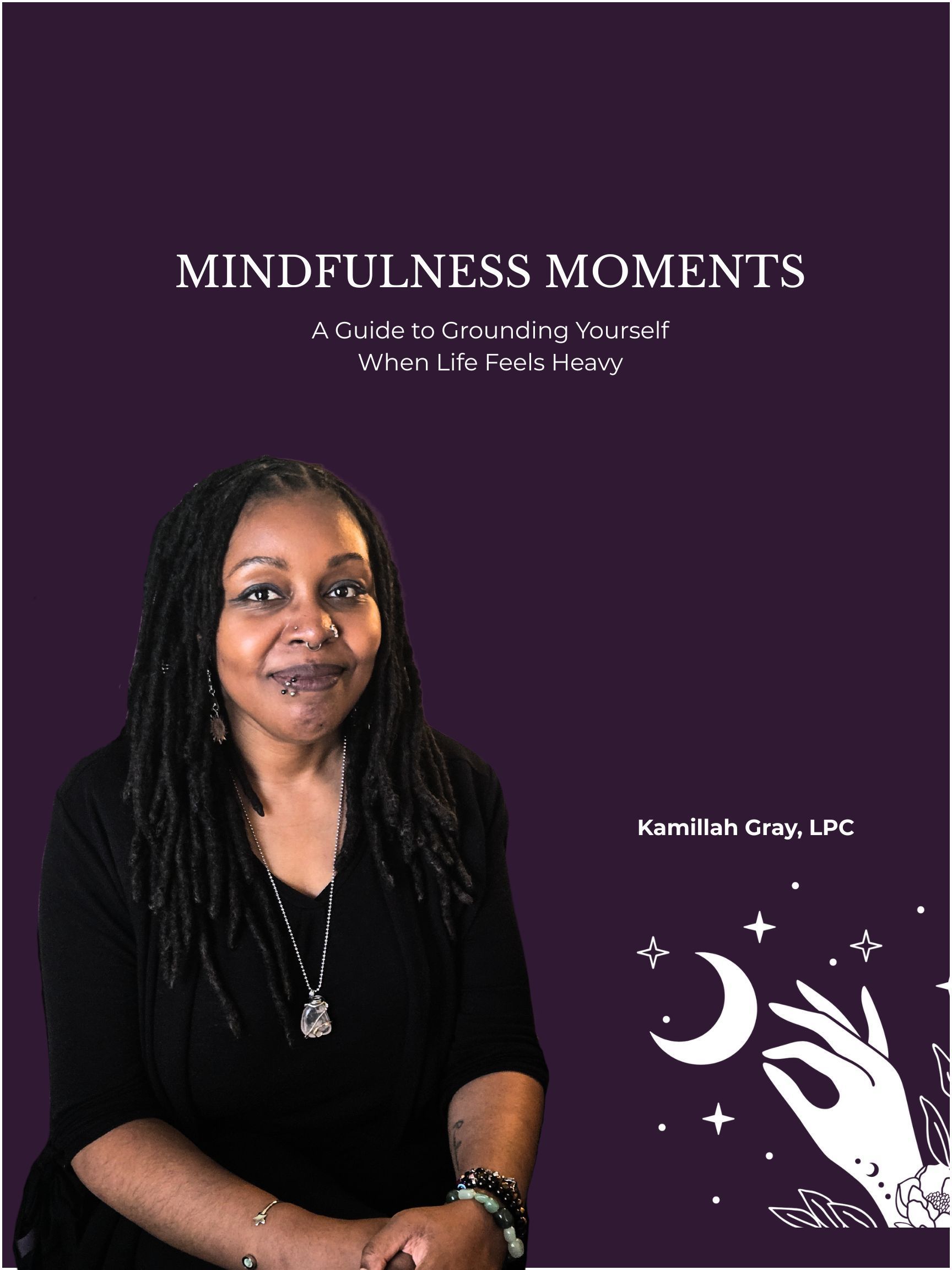
Mindfulness Moments for When Life Feels Heavy
This guide shares gentle grounding practices you can use when stress rises, your body feels tense, or your thoughts start to spiral. Created by a licensed therapist, each exercise supports calm, clarity, and emotional steadiness in everyday moments.
You can open this guide during a hard day, before sleep, or whenever you want to feel more present and settled.
Inside you’ll find
• A simple emotional and body check in
• Box breathing to slow your nervous system
• 5 4 3 2 1 grounding to anchor you in the present
• A short body scan for releasing tension
• Progressive muscle relaxation
• Reflection pages to track how you feel
Each exercise takes only a few minutes and meets you right where you are.
Frequently Asked Questions
If you're considering therapy, it's normal to have questions. Starting something new, especially something as personal as therapy, can bring up uncertainty. I've gathered some of the questions I hear most often below.
If you don't see your question answered here, please reach out. There's no such thing as a silly question, and I'm happy to help you figure out if this is the right fit.
How do I know if therapy is right for me?
If something in your life feels harder than it needs to be, whether that's anxiety, relationships, identity, or just a persistent sense that things aren't okay, therapy might help. You don't need to be in crisis to deserve support. If you're curious enough to be reading this page, that's a sign that some part of you is ready to explore what therapy could offer.
What happens in the first session?
The first session is about getting to know each other. I'll ask about what's bringing you to therapy, what you're hoping to get out of it, and a bit about your history. You'll have space to ask me questions too. Think of it as a conversation to see if we're a good fit, there's no pressure to dive into anything deep right away.
How do I schedule an appointment?
You can reach out through my contact page or send me an email. I'll respond within one to two business days, and we'll set up a free consultation call to connect before scheduling your first full session.
What should I prepare before my first session?
Nothing specific. You don't need to have your thoughts organized or know exactly what you want to work on. Just show up as you are. If there's paperwork to complete, I'll send it ahead of time so we can use our session for what matters.
How long are sessions?
Standard sessions are 53 minutes. This gives us meaningful time to work while leaving space for you to transition back into your day.
How often do people come to therapy?
Most clients start with weekly sessions, which helps build momentum and continuity. As things progress, some people move to every other week or as needed. We'll figure out together what rhythm works best for you.
Do you offer virtual sessions?
Yes, all sessions are virtual. I serve clients throughout Virginia, which means you can attend from wherever feels most comfortable and convenient for you. All you need is a private space and a reliable internet connection.
What is your cancellation policy?
I ask for at least 48 hours notice if you need to cancel or reschedule. I understand that life happens, especially for clients managing chronic illness or unpredictable circumstances, and I approach cancellations with flexibility and compassion.
Where is your office located?
I don't have a physical office. My practice is entirely virtual, which allows me to serve clients across Virginia without the barriers of commuting or geographic limitations.
What are your fees?
You can find current session rates on my Contact & Fees. I believe in transparency around cost, and I'm happy to discuss fees during our consultation call.
Do you accept insurance?
Yes. I accept Anthem Blue Cross Blue Shield and Sentara Health Plans.
If you are using a different insurance provider, I am considered an out-of-network provider. In that case, payment is due at the time of your session. I can provide a detailed superbill that you may submit to your insurance company for possible reimbursement, depending on your out-of-network benefits.
What forms of payment do you accept?
I accept credit cards, debit cards, and HSA/FSA cards. Payment is collected at the time of each session.
How long does therapy take?
It varies for everyone. Some people come for a few months to work through something specific. Others benefit from longer-term support. There's no set timeline, and we'll check in regularly about how things are going and what you need.
What approach do you use?
I draw from multiple approaches based on what each client needs, rather than sticking rigidly to one modality. My work is collaborative, client-led, and grounded in warmth and honesty. I believe you already have wisdom inside you, my job is to help you access it.
Is everything I say confidential?
Yes, with very limited exceptions required by law (such as imminent risk of harm to yourself or others, or suspected abuse of a child or vulnerable adult). I'll explain confidentiality fully during our first session so you know exactly what to expect.
What if I don't know what to talk about?
That's okay. You don't need to arrive with an agenda. Sometimes we'll pick up where we left off. Sometimes we'll start with what's present for you in the moment. And sometimes not knowing what to talk about becomes the thing we explore. There's no wrong way to do this.
Still Have Questions?
If there's something I haven't answered here, I'd love to hear from you. Reaching out doesn't commit you to anything, it's just a chance to get the information you need to make the right decision for you.